
How To Choose Art For Contemporary Interiors
The most compelling contemporary interiors are rarely the result of perfect coordination. They are shaped by balance, restraint and pieces that bring character into the room. Art is often the element that does this most powerfully. More than a finishing touch, it can define atmosphere, introduce emotion and give a space its identity.
When choosing art for a contemporary home, it is helpful to move beyond the idea of matching colours too closely. The strongest choices are rarely made on palette alone. A painting does not need to mirror the exact tone of a wall, upholstery or rug in order to belong. In fact, when art is chosen too literally, a room can begin to feel over styled rather than truly considered. What matters more is resonance. The mood of a work, its quietness or energy, its sense of stillness, movement, softness or depth, will often have a far greater effect on the room than colour matching ever can.


This is especially true in contemporary interiors, where neutral schemes and natural materials often create a sense of calm architectural restraint. Stone, timber, limewashed walls, linen and muted upholstery provide a beautiful backdrop, but they are only part of what makes a space feel complete. Art introduces the emotional register. It brings warmth to pared back rooms, complexity to minimal spaces and a sense of human presence that cannot be achieved through furniture alone.
Scale plays a crucial role here. Larger works often have a stronger, more sophisticated impact than several smaller pieces. A single painting can hold a room with confidence, creating focus without noise. In a sitting room, dining space or entrance hall, one considered work often brings more clarity than a clustered arrangement. It allows the eye to settle and gives the space a centre of gravity. In contemporary interiors, where simplicity is often key, this sense of visual calm is invaluable.
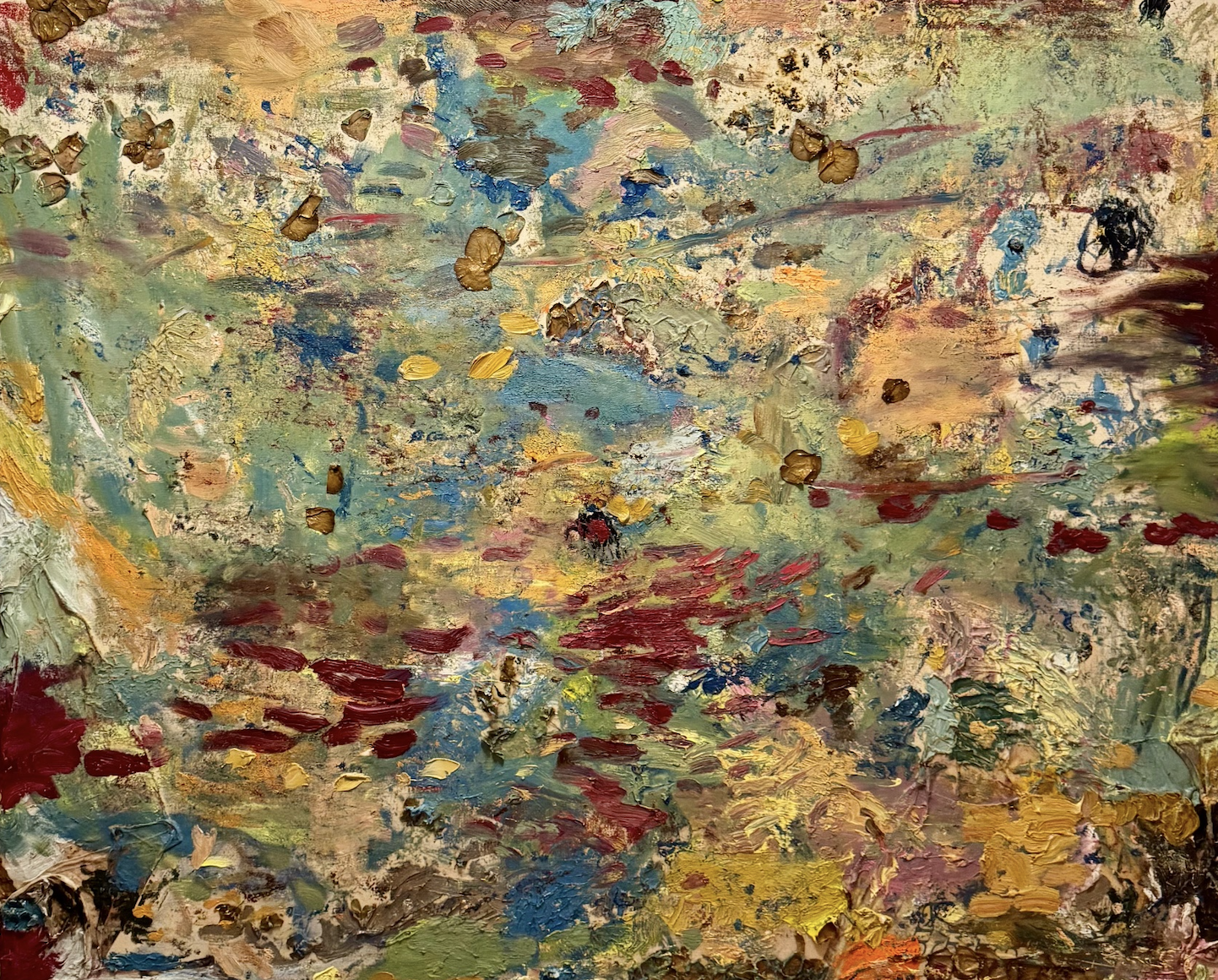
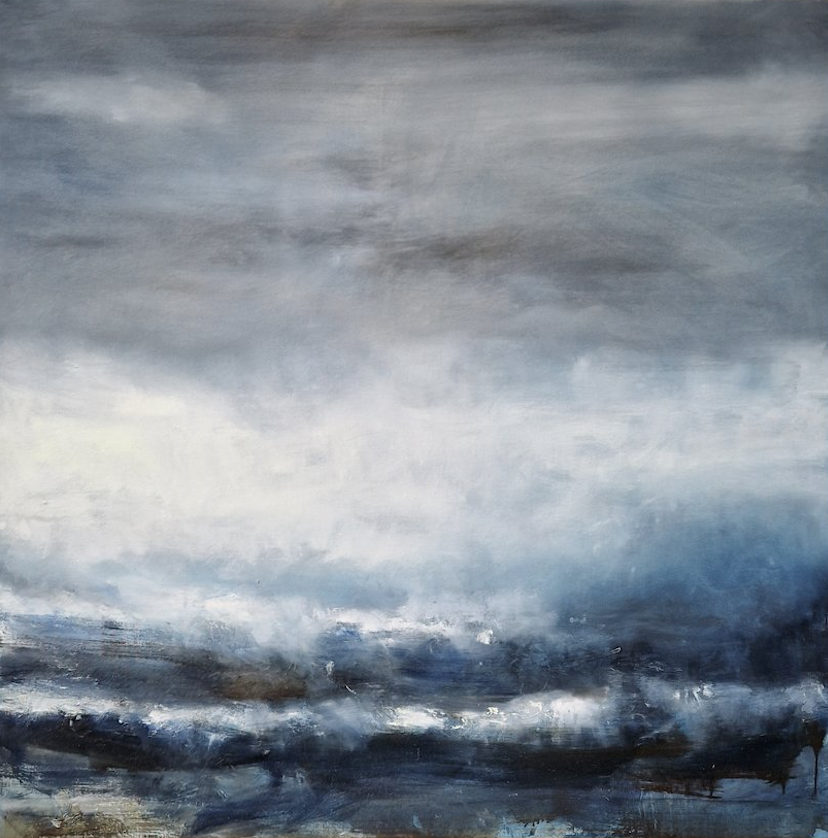
That is not to say every room requires a large statement piece, but it does mean scale should be approached with generosity. Art that is too small can feel apologetic against expansive walls or architectural volumes. Art with presence, by contrast, can soften strong lines, enrich a restrained scheme and create a more layered and resolved interior.
Texture is equally important. In homes where materials are chosen with care, the surface quality of a painting matters enormously. A work with depth, nuance and evidence of the artist’s hand can bring a room to life in a subtle but significant way. It introduces variation against flat planes and polished finishes. It catches changing light. It rewards repeated viewing. These qualities are often what make a painting feel quietly luxurious within a contemporary setting.
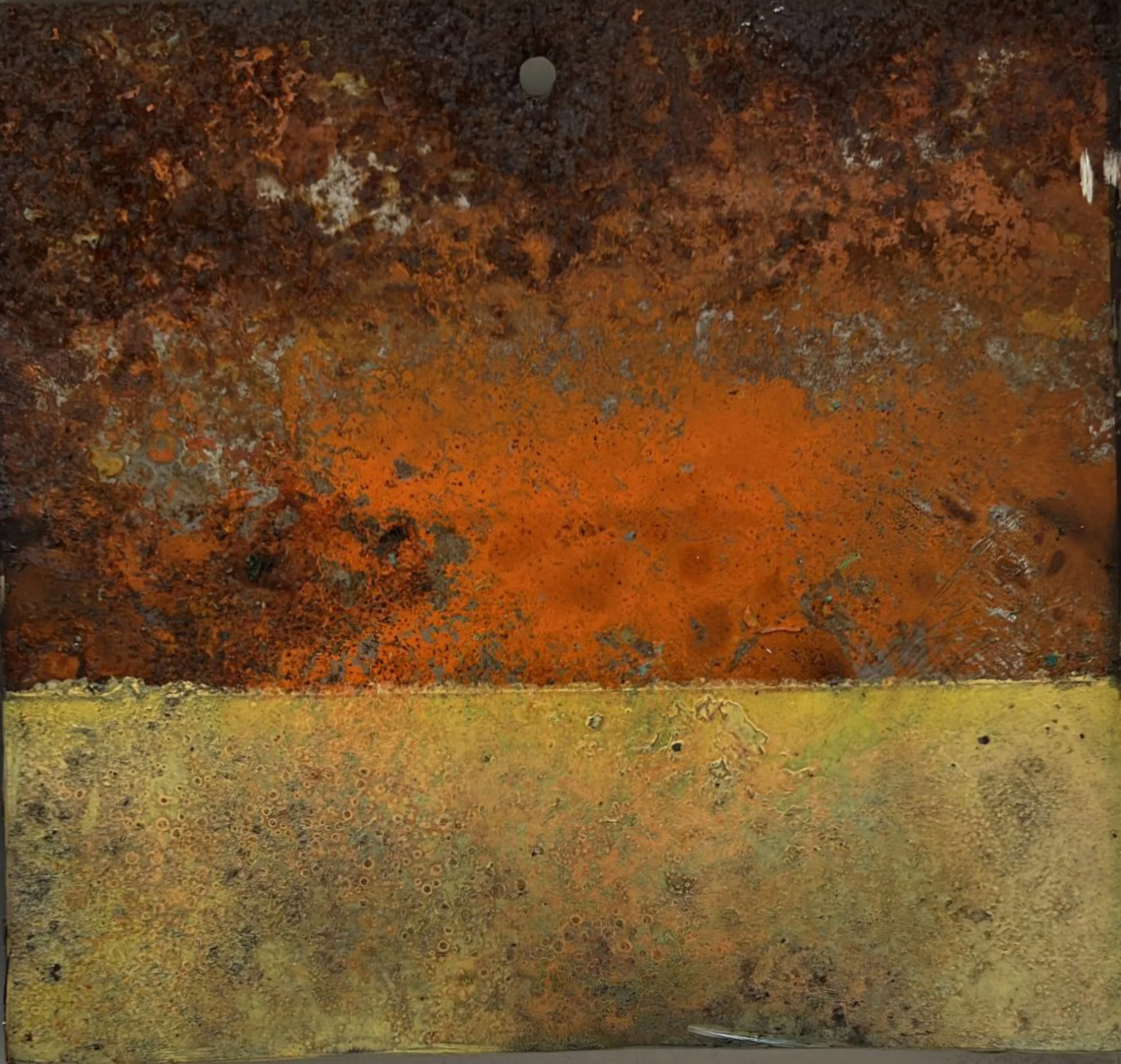
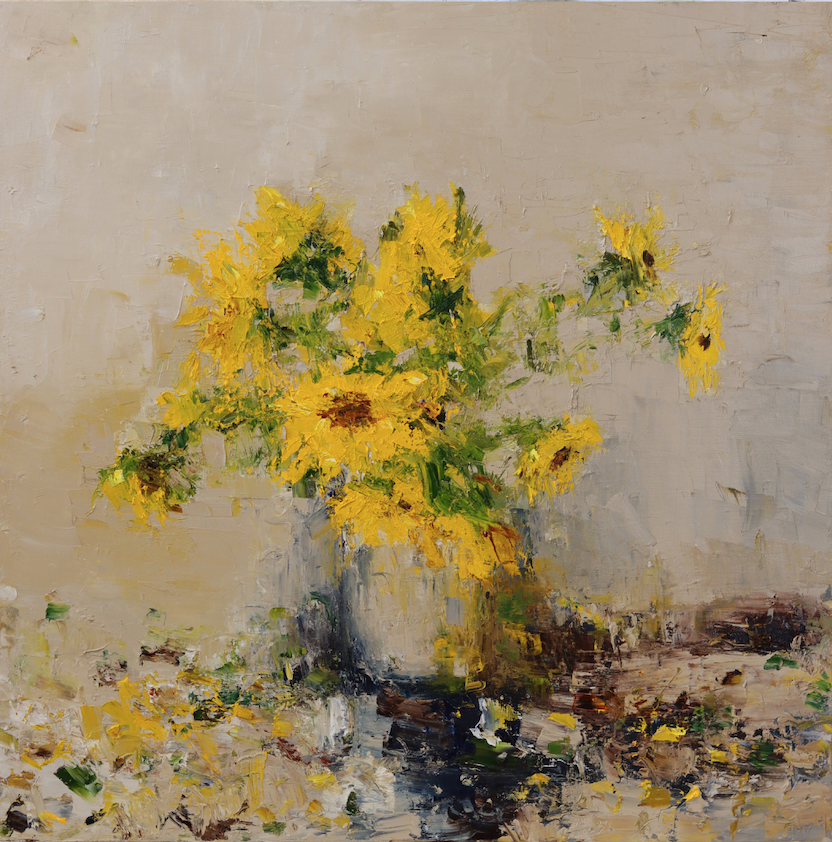
The question, then, is not simply what works with the room, but what the room needs. Some spaces call for a sense of calm and expansiveness. Others need contrast, atmosphere or a point of intensity. A painting can be grounding, luminous, contemplative or energising. It can bring softness to a more architectural interior or add structure to a looser, more organic scheme. The best choice is usually the one that shifts the feeling of the room in the right direction.
Collectors often discover that the works they value most are not those that made immediate decorative sense, but those that continue to reveal themselves over time. The paintings people live with longest are often those with a certain openness to them. They hold attention without demanding it. They offer something different in morning light, evening shadow, or in a different season of life. They become familiar, but never exhausted.
This is where art moves beyond decoration. It becomes part of the lived experience of a home. Seen every day, passed in the hallway, glimpsed from across a room, it begins to shape memory and feeling. It becomes woven into the atmosphere of the space itself.
For that reason, choosing art for contemporary interiors is best approached less as styling and more as curation. Consider the architecture, the light, the materials and the mood of the room, but also allow instinct to play a role. The right painting will often feel less like an accessory and more like an anchor. It will bring presence, depth and a sense that the room has truly come into itself.
Art should not simply complete a space. It should transform it. In contemporary interiors, where so much depends on subtlety, the right work can be the element that gives a room soul.
oil & mixed media on board
31 × 40 cm
framed 45 × 55cm
signed and titled on reverse
by Laura Menzies