
Art for Above the Sofa
The first post in The Art For... Series, a curated guide to choosing art for different spaces in your home.
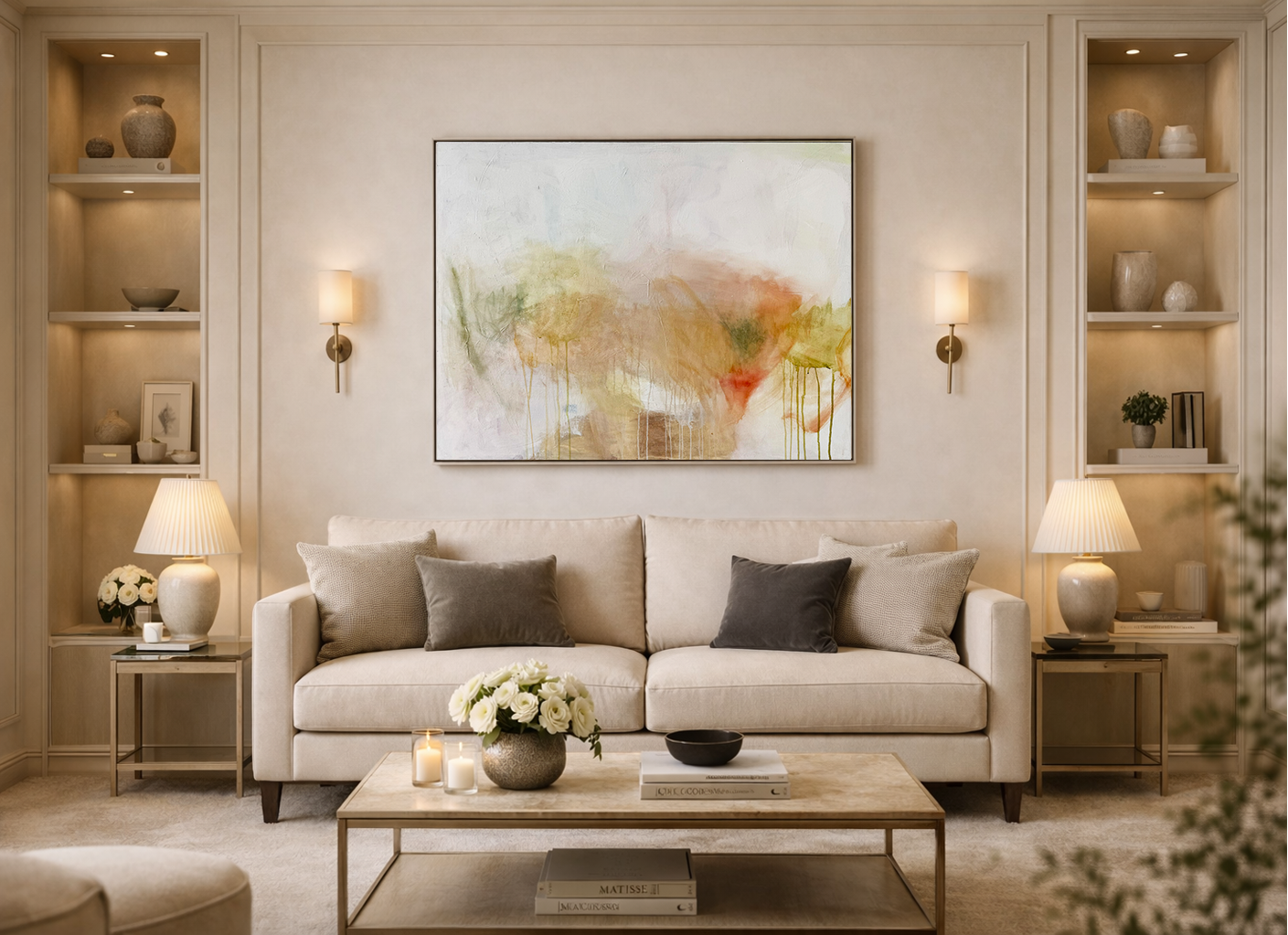
A Place to Dream by Laura Menzies
View Artwork
The wall above a sofa is often one of the most important places in a room, yet it is also one of the easiest to get wrong. Too small, and the work can feel lost. Too busy, and it can upset the balance of the space. Too cautious, and the room never quite settles.
When it works, art above the sofa does far more than fill an empty wall. It gives structure to the room. It sets the tone for how the space feels. It can bring warmth, rhythm, depth, softness or contrast. It draws the eye, anchors the furniture beneath it, and often becomes the point around which the rest of the room begins to make sense.
This is one of the reasons clients so often ask about it. They may already have a sofa they love, a room that is nearly finished, or a wall that has remained blank for months. Usually, the uncertainty is not whether they want art, but what kind of work will hold the space properly.
You can browse our current selection of original paintings in All Art
Begin with scale

Scale is almost always the first consideration, and rightly so. A painting may be beautiful in its own right, but still not be the right answer for a particular wall.
Above a sofa, the artwork needs enough presence to relate to the width and visual weight of the furniture below it. If it is too small, the sofa becomes the dominant element and the painting feels secondary, almost incidental. The wall can seem unresolved, as though something has been added rather than placed with intention.
As a general guide, the artwork or arrangement should span around two thirds of the width of the sofa. It is not a rigid formula, but it is a useful starting point. It creates a sense of proportion without making the wall feel heavy.
In practice, this often means that one substantial work is more effective than something modest in scale. A wider horizontal painting can work beautifully here, particularly in living rooms where the sofa forms a long, low line across the room. Equally, a square work with enough depth and presence can feel striking above a sofa, especially where the wall space is more contained.
Our Statement & Scale collection brings together works with the presence to hold a larger wall.
Diptychs and pairs can also work particularly well. They allow for width without needing a single very large canvas, and they can bring a pleasing rhythm across the wall. The important thing is that they still read as a considered whole rather than separate pieces placed side by side.
Think about what the room needs
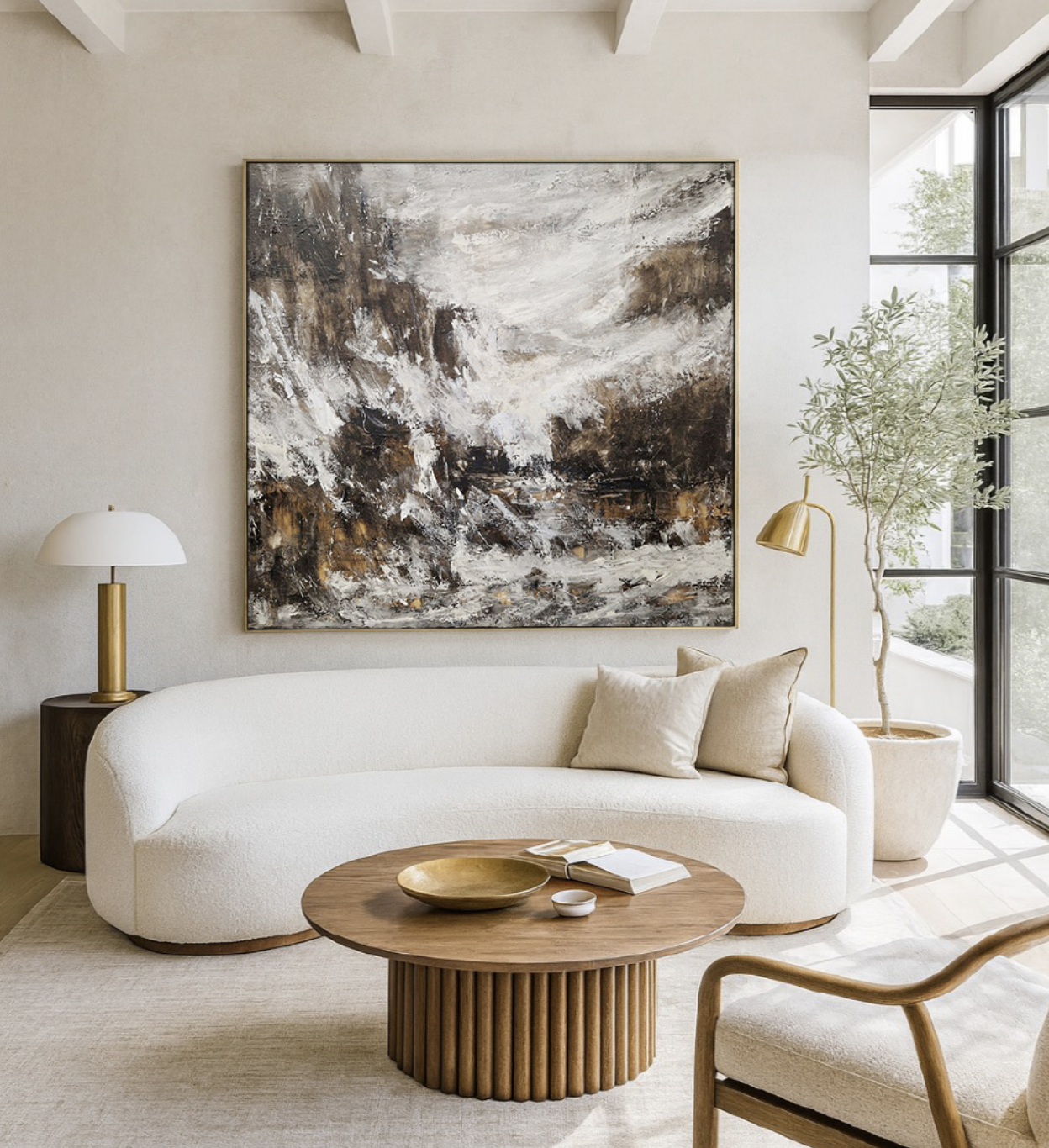
Sea Spray and Flecks of Gold by Hannah Ivory Baker
View
Not every room asks for the same thing from its art.
Above a sofa, a painting often does more than it might in a hallway or smaller corner of the house. This is usually where people sit, gather, read, talk, pause, or end the day. The artwork becomes part of the atmosphere of the room. It is not simply passed on the way through. It is lived with.
That does not mean it must be restrained. A stronger piece can bring real energy to a sitting room, especially when the rest of the palette is understated. Equally, more tonal or layered work can bring depth without overwhelming the space. What matters is that the painting feels in dialogue with the room rather than detached from it.
Mood matters just as much as scale. A room of soft neutrals, natural textures and pale upholstery may benefit from a work that introduces movement, warmth or complexity. A darker, more characterful interior may call for something with luminosity, contrast or a stronger focal presence. Sometimes the right piece echoes the room. Sometimes it is the element that lifts it.
Our Living Room Edit offers a considered starting point for works that sit naturally within this kind of space.
One large work or a considered grouping
There is no single correct format for above the sofa, but each approach creates a different effect.
A single large work often has the greatest impact. It feels confident, settled and spacious. It gives the wall a clear centre and allows the eye to rest. In many interiors, this is the strongest option, particularly where the room already has enough detail through textiles, books, lamps or other objects.
A diptych or pair can be equally effective where more width is needed or where the collector wants something slightly less formal than one central statement. It can soften the effect of a single large rectangle while still giving the wall enough visual weight.
A gallery wall can work too, but it needs more care. Above a sofa, these arrangements can quickly begin to feel cluttered if the works are too small or the spacing is uneven. For HCA’s point of view, a more restrained approach usually feels stronger. Fewer works, chosen well, with enough space around them, will often have more presence than a crowded arrangement.

Consider height and placement
Even the right piece can feel wrong if it is hung too high.
One of the most common mistakes is placing artwork so far above the sofa that it feels disconnected from the furniture below. The relationship between the two should feel intentional. In most cases, the bottom of the frame should sit not too far above the back of the sofa, allowing the painting to feel visually anchored to the space.
A useful guide is somewhere around 15 to 25 cm above the sofa, depending on ceiling height, frame and scale. The exact measurement matters less than the overall impression. It should feel joined up, balanced and natural.
Shape matters
Horizontal works are often the most obvious choice above a sofa because they echo the proportions of the furniture beneath. They can help extend the line of the room and create a strong sense of balance across the wall.
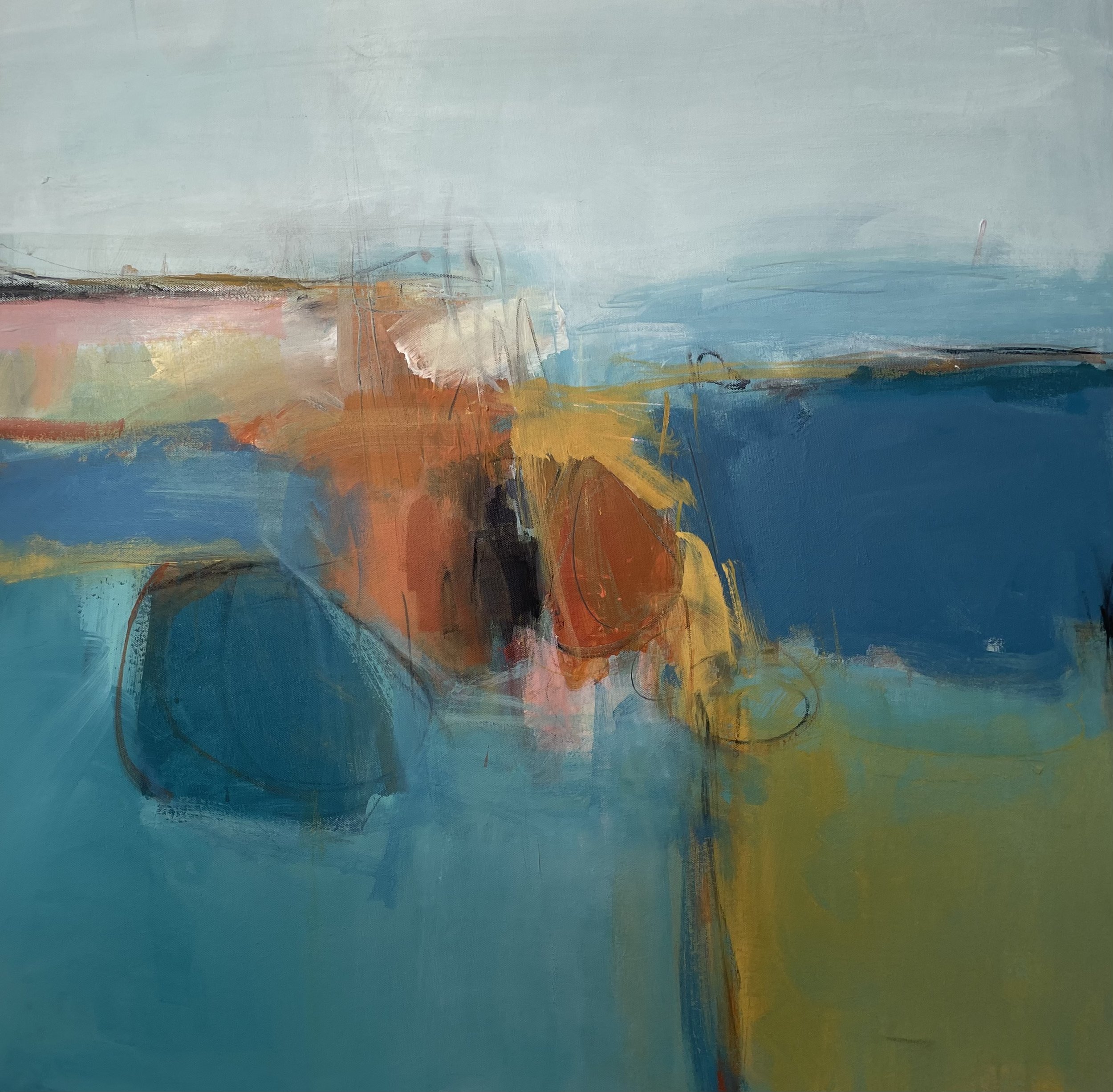
That said, they are not the only answer. A square painting can be extremely effective, particularly if it has enough internal movement, surface and tonal depth to hold the eye. In some spaces, a square format can feel more contemporary and more resolved than a narrow horizontal.
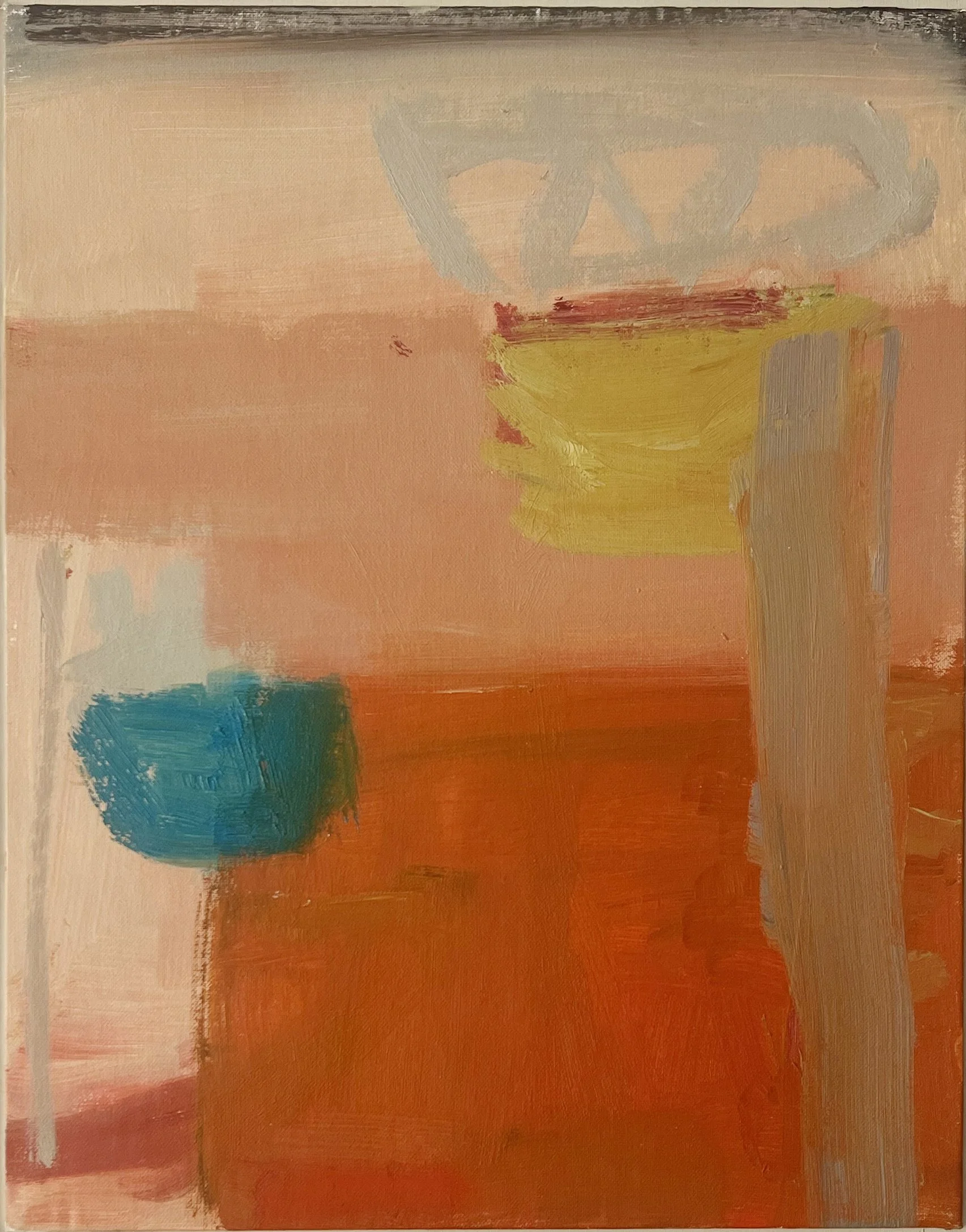
Vertical works are less commonly used above a sofa, but they can still work beautifully in the right setting, especially as a pair or on a narrower wall. The best choice is rarely about following a formula. It is about understanding the architecture of the room and the feeling you want the space to have.
Let the room guide the painting
Clients sometimes assume that the artwork needs to match the room exactly, picking up the same colours as the cushions, rug or wall paint. In practice, that can lead to something that feels a little too expected.
A more successful approach is to look at the room as a whole and ask what it needs. Does it need warmth, softness, energy, contrast, depth, movement, or a stronger focal point? The best painting often answers the room rather than simply repeating it.
This is especially true in living spaces, where art can be the element that stops a room feeling too polished, too flat or too predictable. It brings texture, atmosphere and character. It adds something that cannot be achieved through furnishings alone.
Work with presence
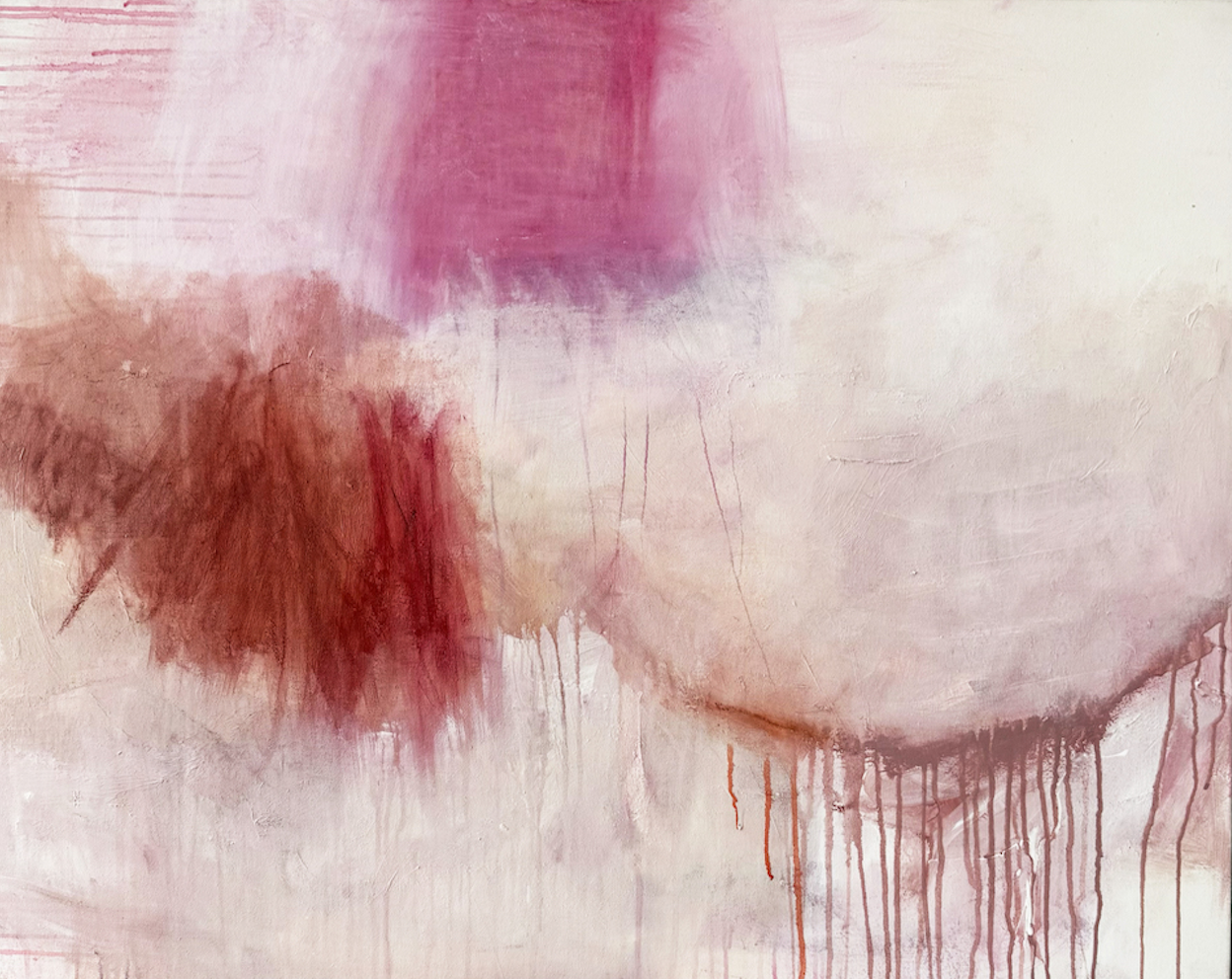
oil & mixed media on canvas
80 × 100 cm - artwork
framed 83 × 103cm
signed and titled on reverse
by Laura Menzies
At Highgate Contemporary Art, we are always drawn to work that brings presence to a room. Not simply because of size, but because of the way it holds light, surface, colour and feeling.
Above a sofa, that presence matters. The piece does not need to overpower the room, but it does need to hold its own within it. Whether that comes through scale, texture, gesture, stillness or composition will vary from work to work. What matters is that it does not disappear once placed.
This is often why original paintings work so well in these settings. Surface, variation and material depth bring something that reproductions often cannot. They shift gently with the light, reveal more over time, and become part of the lived rhythm of the room.
A considered finish
Choosing art for above the sofa is not only about measurements, though proportion does matter. It is about balance, atmosphere and presence. It is about finding work that gives the room a centre of gravity and allows the space to feel considered rather than merely furnished.
The best choices tend to feel both natural and inevitable, as if the room had been waiting for them.
If you are looking for work for a particular space, you are very welcome to get in touch with a photograph of the room and the wall measurements. We are always happy to advise on scale, placement and pieces that may work especially well.

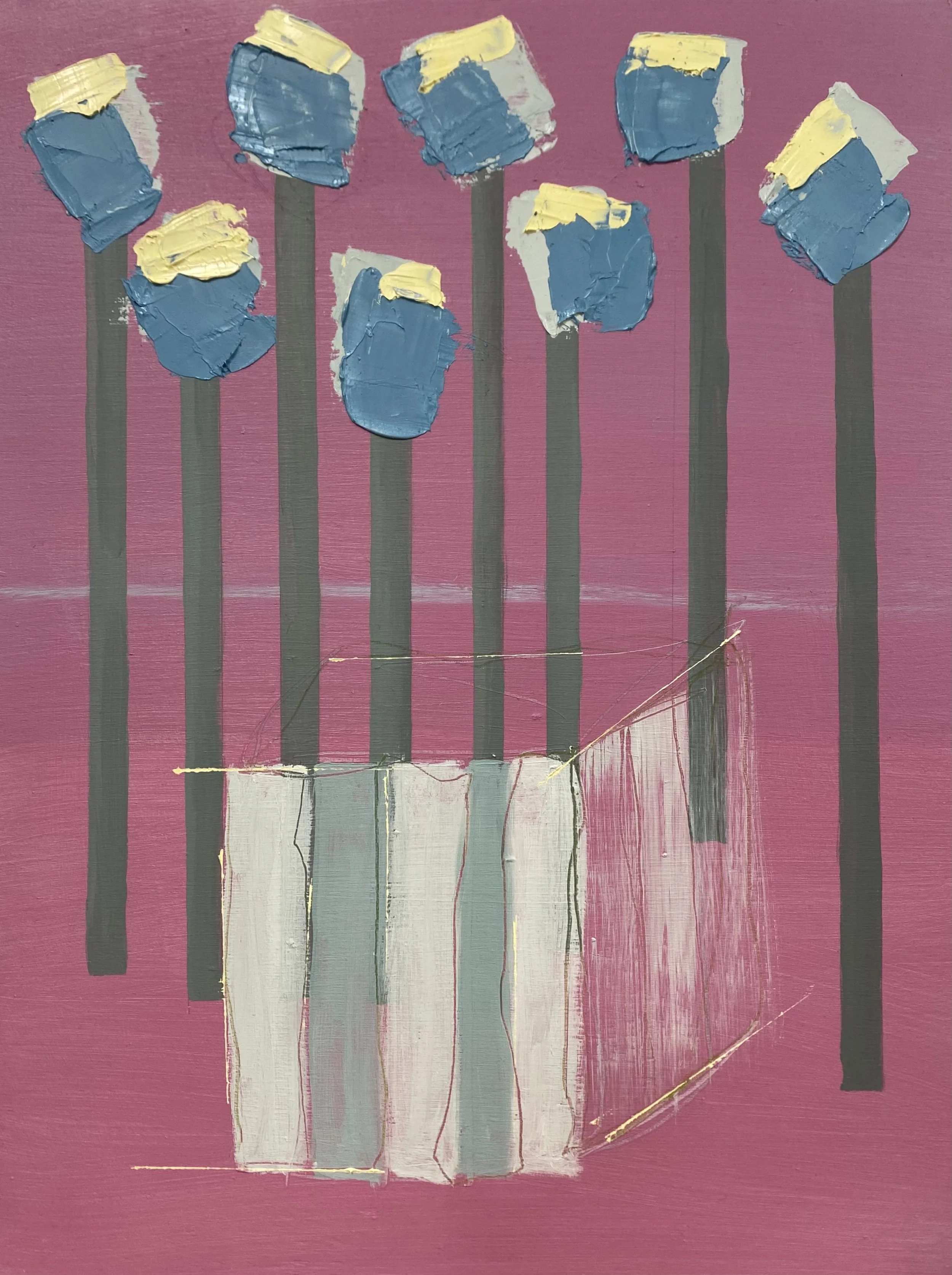
oil paint and oil bar on canvas
90 x 60cm
framed in off white tray frame
by Aisling Drennan