
The Calm Room Formula: 7 Design Moves That Make Neutral Interiors Feel High End
Neutral rooms look effortless when they’re done well. In reality, the best calm interiors are carefully balanced: warmth, texture, scale, and a sense of “enough”.
Here are seven moves we return to again and again when styling (and curating art for) calm homes.
1) Choose a warm base, then build layers
2026 trends are clear: warm, grounded neutrals are leading — sand, clay, vanilla and soft stone — creating calm without coldness.
Try this: pick one “main neutral” (walls + large furniture) and two “supporting neutrals” (textiles + rugs).
2) Add tactile walls (even subtly)
Texture is a major thread for 2026: plaster and limewash-style finishes give neutral rooms depth and light movement.
If you can’t do a finish, mimic it with:
woven wall hangings
matte paint + raking light
large-scale art with visible surface
3) Use wood as your “warmth engine”
Light oak reads airy; walnut reads grounded; smoked oak reads sophisticated. Wood tones keep neutrals feeling human and lived-in.
Shortcut: match your frames to your wood tone (or intentionally contrast).
4) Keep contrast deliberate, not accidental
Calm rooms still need an anchor: a charcoal frame, a black side table, a deep-toned ceramic. Without one, everything can blur.
Designers are also forecasting a return of richer, more dramatic tones as accents — but used thoughtfully so rooms still feel restful.
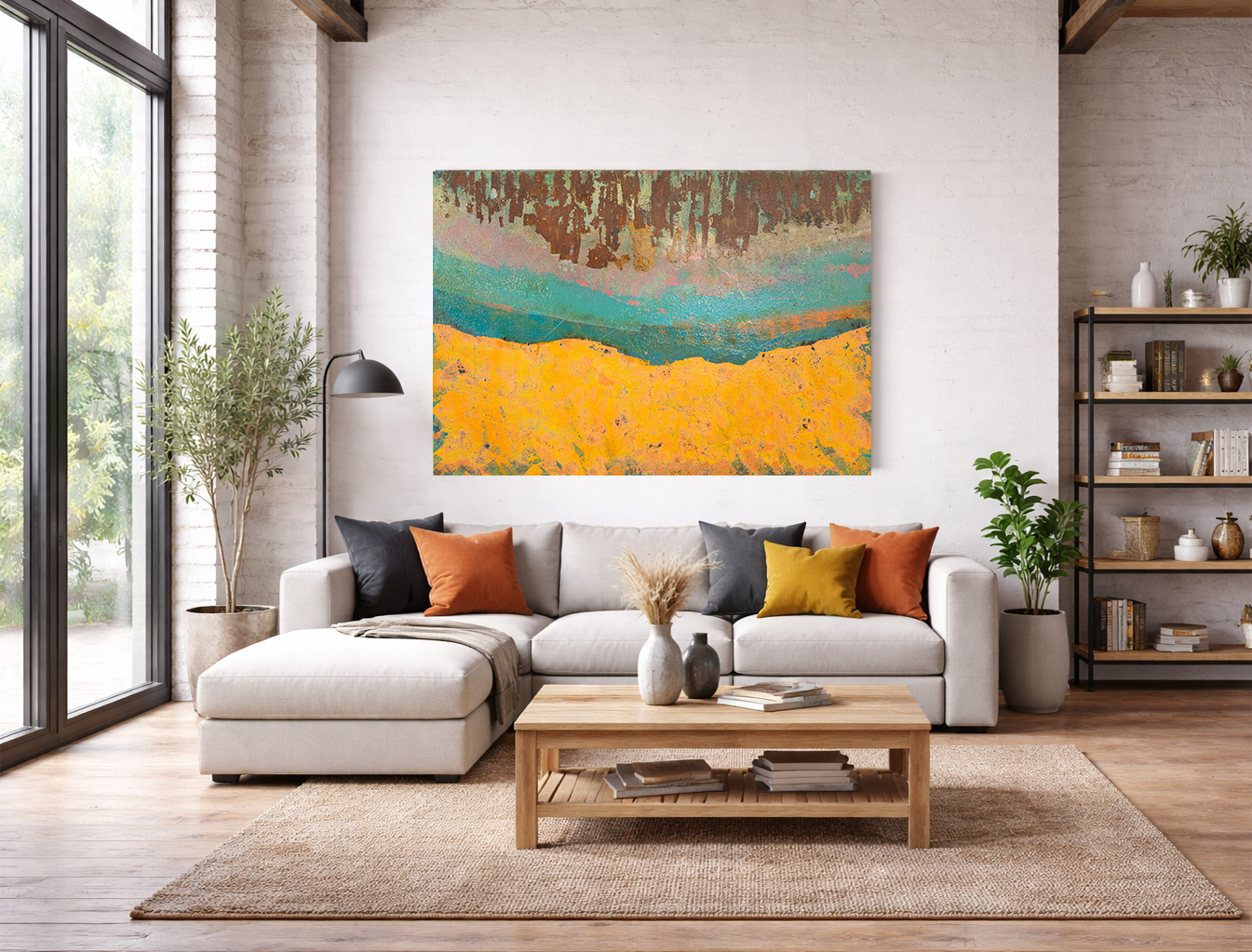
Winhurst Cove by Sam Peacock
5) Repeat one quiet colour note (optional, but powerful)
Even in a neutral category, one restrained colour thread can elevate everything. Blue-toned serenity is a continuing 2026 theme, often paired with warm neutrals.
Think: denim cushion + slate vase + one artwork with a soft blue note.
6) Make art the focal point (not the finishing touch)
A neutral room is the perfect stage for art — but only if you treat it as a key decision.
What works best in calm rooms:
tonal abstracts with confident composition
atmospheric landscapes / seascapes
contemporary still life with negative space
pieces with surface texture (palette knife, layered paint, raw canvas edges)
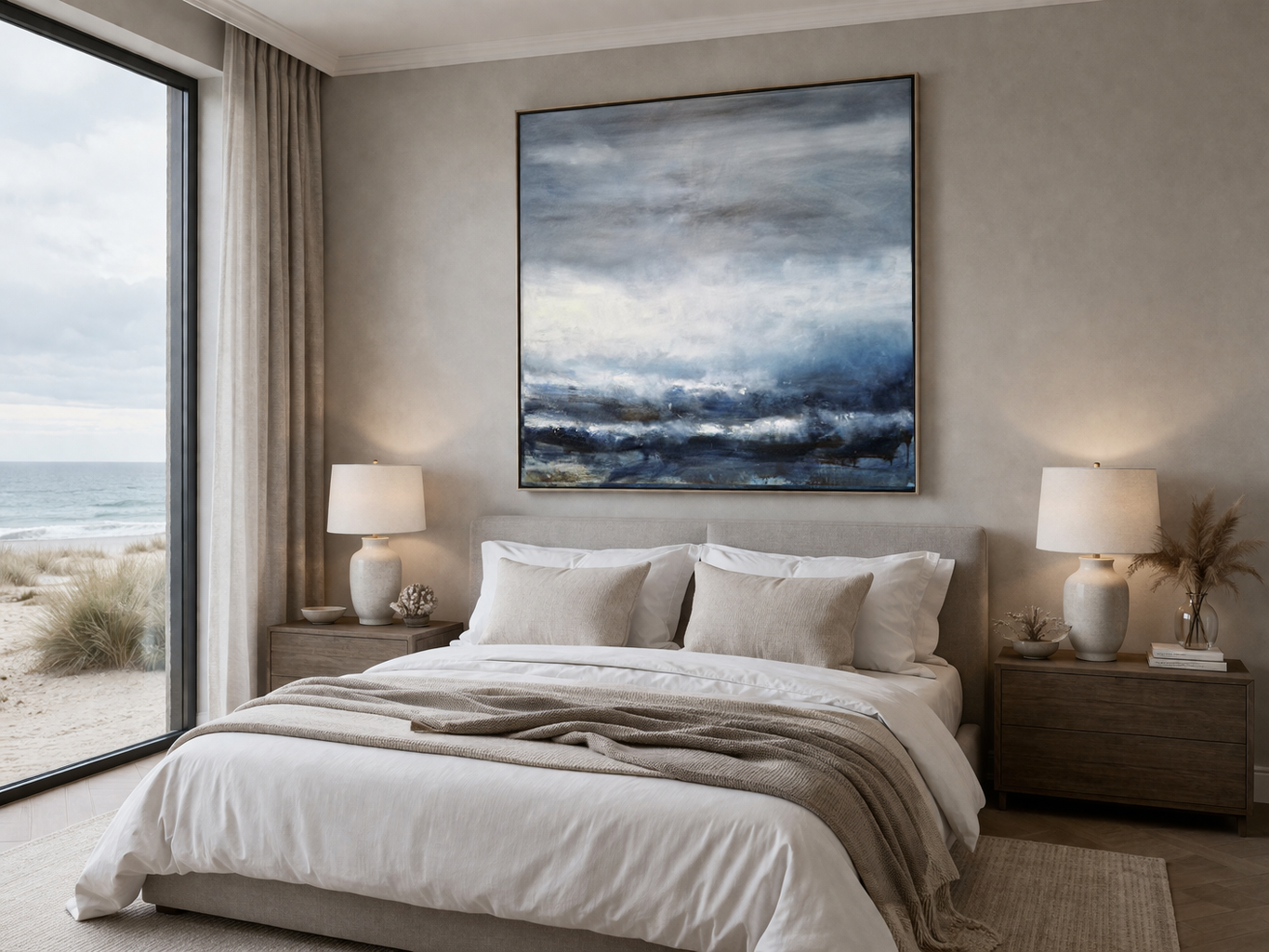
Neither Out Far Nor in Deep by Hannah Ivory Baker
7) Curate like a gallery: fewer pieces, better placement
Calm homes don’t need more objects — they need the right ones, in the right place.
Placement tips (fast, effective):
Hang centre of artwork at roughly eye level
For sofas: artwork width ~⅔ of sofa width
Use one large piece rather than a busy cluster if your aim is calm