
Focal Paintings for Living Rooms: How to Choose Art That Holds a Space
The living room is often the room that asks the most of a painting.
It is a place of conversation and retreat, of everyday life and occasional gathering. It may be where you read in the morning, where friends sit with a glass of wine, where children drift through, where the light changes from afternoon brightness to evening warmth. A painting in this space needs to do more than simply occupy a wall. It has the opportunity to shape the whole atmosphere of the room.
A focal painting is not necessarily the loudest piece in a home. It does not have to shout for attention or dominate everything around it. The best focal paintings often have a quieter kind of authority. They hold the eye, gather the room together and create a sense of intention.
They give the living room a centre.
What is a focal painting?
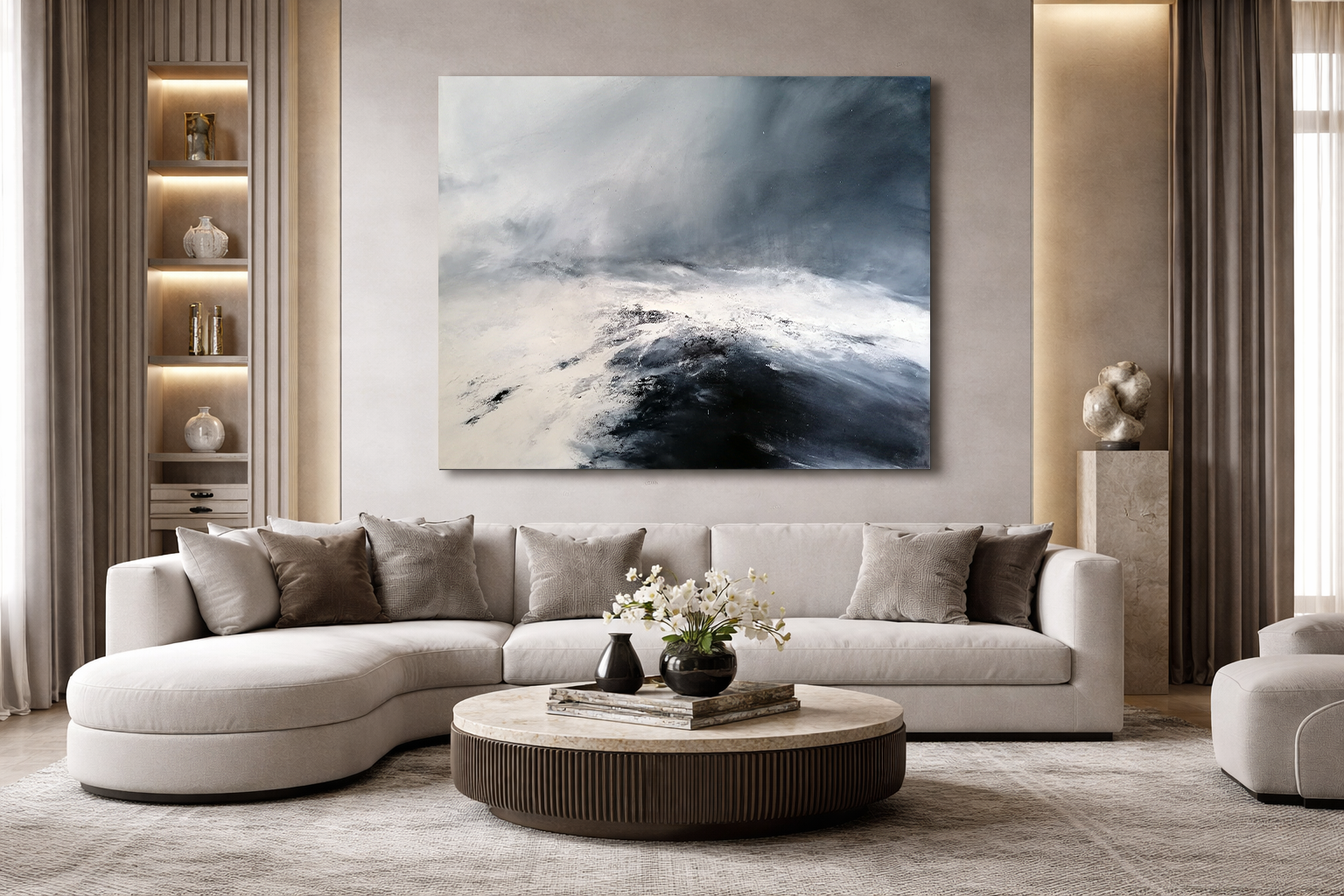
Silence, Skagaströnd, Iceland oil on deep edge canvas 80 × 100cm by Janette Kerr
A focal painting is the piece around which the room begins to settle.
It might sit above a sofa, over a fireplace, between two windows or on the wall you see as you enter. It may be large in scale, rich in colour, textural in surface or simply beautifully placed. Its role is to draw the eye and give the room a visual anchor.
In interiors, this matters. Without a focal point, a living room can feel visually scattered, even when every individual element is beautiful. A strong painting can bring balance to furniture, soften architecture, introduce colour, create rhythm and give a space emotional depth.
It is the difference between a room that is decorated and a room that feels held.
Scale: choosing a painting with presence
Scale is one of the most important considerations when choosing a focal painting for a living room.
A large wall, a generous sofa or a high ceiling can usually take more than people expect. In fact, choosing too small a painting is one of the most common mistakes. A small work on a large wall can feel isolated, while a painting with more scale can make the room feel more confident and complete.
Above a sofa, a useful guide is to choose a painting that sits somewhere around two thirds of the sofa width. It does not need to be exact, and there are always beautiful exceptions, but this proportion usually helps the artwork feel connected to the furniture beneath it.
For rooms with a fireplace, alcove, chimney breast or architectural feature, the painting should feel in conversation with the structure of the room. It should not hover too high or feel like an afterthought. A focal painting works best when it feels deliberately placed, with enough space around it to breathe.
Colour: echo, contrast or atmosphere
A focal painting can work with a room in several different ways.
It may echo colours that are already present in the space: a trace of blue from a rug, a warm ochre picked up in a cushion, a soft green that connects with a view onto the garden. This creates a sense of harmony without becoming overly matched.
Alternatively, the painting may introduce a new colour entirely. In a neutral living room, one expressive painting can bring life, warmth and energy without requiring the whole room to change. A flash of coral, a deep indigo, a mineral green or a softened pink can become the point from which smaller details are drawn.
Then there are paintings that work less through obvious colour and more through atmosphere. A misted landscape, a tonal seascape, a muted floral or a layered abstract work can bring depth to a room without disrupting its calm. These pieces often become more powerful over time because they shift with the light and the mood of the space.
The question is not simply, “Does this painting match?”
A better question is, “What does this painting make the room feel?”
Texture and surface

Detail: A Quiet Refusal of Form oil on canvas 120 × 100cm by Hannah Ivory Baker
Paintings have a physical presence that prints and flat decorative pieces often cannot replicate.
Brushmarks, palette knife work, layered pigment, scraped back surfaces and areas of exposed ground all bring texture into a room. This is particularly important in living spaces, where art sits alongside linen, wool, wood, stone, plaster, ceramics and natural light.
A textured painting can soften a clean contemporary interior. It can bring depth to a calm neutral scheme. It can add energy to a room that feels too still. Even when the palette is restrained, the surface of a painting can create movement and richness.
This is one of the reasons original artwork is so effective as a focal point. It does not only add an image to a room. It adds materiality.
Above the sofa
The wall above the sofa is one of the most natural places for a focal painting.
This is often the main horizontal line in a living room, so a painting placed here can bring balance and structure. Larger works are particularly successful in this position, especially when they relate to the width of the sofa and sit low enough to feel connected to the furniture below.
A single large painting can create a calm, confident statement. It gives the room clarity and allows the artwork to breathe.
For a more collected feeling, a pair of works or a small grouping can also work beautifully, particularly if the pieces share a palette, subject or sense of mood. This can feel more intimate and layered, especially in homes with books, textiles, antiques or personal objects.
Over the fireplace
A fireplace already carries visual weight, so a painting above it can feel especially natural.
The important thing here is balance. The artwork should feel proportionate to the mantel and the chimney breast, neither too small nor too crowded by objects around it. If the mantel is styled, allow the objects to support the painting rather than compete with it.
Paintings with atmosphere often work beautifully above a fireplace. Landscapes, seascapes, botanical works and expressive abstracts can all soften the architecture and introduce a sense of movement. In the evening, when lamps are on and the room becomes more intimate, a painting in this position can take on a particular presence.
One statement painting or several smaller works?
Both approaches can work, but they create different effects.

The Warmth That Remains oil on canvas 80 × 120cm
A single statement painting gives a room clarity. It is often the strongest choice when you want the artwork to define the space and create a confident centre point.
Several smaller works can create a more personal, collected feeling. This can be especially effective in alcoves, above a console, beside a reading chair or across a narrower wall. The key is cohesion. The works do not need to match, but they should feel connected through tone, subject, framing or rhythm.
A living room can hold more than one important artwork, but it usually benefits from one clear lead. Once that focal point is established, other pieces can sit more gently around it.
Choosing a painting you can live with
A focal painting is something you will see every day. It will be there in morning light and winter evenings, during ordinary moments and special gatherings. For that reason, it should offer more than instant impact.
Look for a painting that continues to give something back. A surface you want to look at closely. A composition that does not reveal itself all at once. A palette that shifts with the light. A work that feels connected to your home, but not swallowed by it.
The best paintings for living rooms are not simply decorative. They bring mood, memory, colour and character. They make a room feel more personal, more resolved and more alive.
Finding the right focal painting
At Highgate Contemporary Art, we think about artwork in relation to the spaces it will inhabit. A focal painting for a living room might be expansive and expressive, calm and tonal, coastal, botanical, abstract or rooted in landscape. What matters is not only how it looks, but how it changes the feeling of the room.
A well chosen painting can anchor a seating area, soften a fireplace, draw together a colour palette or create a striking first impression as you enter. It can bring stillness, energy, warmth or depth.
Most importantly, it can make a living room feel like a place with a point of view.
Explore paintings that work beautifully in a living room
or get in touch if you would like guidance on scale, placement, framing or choosing a piece for your living room.